

Did you know Australia had a cybercrime report every 6 minutes in 2024? As a specialist Sydney SEO agency, we help Australian businesses turn insights like these into real search growth.
As online privacy and security breaches rise, Aussies are trying to learn more about how to safeguard themselves, leading us to want to learn more about virtual private networks (VPNs) and their benefits.
In fact, roughly 62.7% of Australians are familiar with a VPN. Besides enhanced data protection, VPNs have been useful for unblocking geo-restricted content, websites, and streaming services.
While that’s promising, VPNs still have its fair share of ups and downs. Read on to learn more about Australia’s current VPN usage trends, growth patterns, and future insights to stay safe and secure online today.
The Rise of VPN Usage in Australia
As more Aussies attempt to protect their digital footprints, the country’s VPN service usage continues to soar. Cloud security Zscaler reveals that 56% of organisations had one or more VPN-related cyber threats in 2024, indicating the growing sophistication of attacks targeting VPNs globally.
Let’s break down by the numbers how VPN services remain essential in Australia’s tech landscape, providing a secure tunnel to protect your online security and privacy.
VPN Adoption in Australia
A NordVPN survey indicates the average VPN usage in Australia, with over a quarter (27.1%) of the population using it in 2023. That’s only a slight uptick in adoption in recent years, even though 6 out of 10 Aussies are aware of these tools. This suggests that fewer users value online privacy despite reliance on digital interactions.
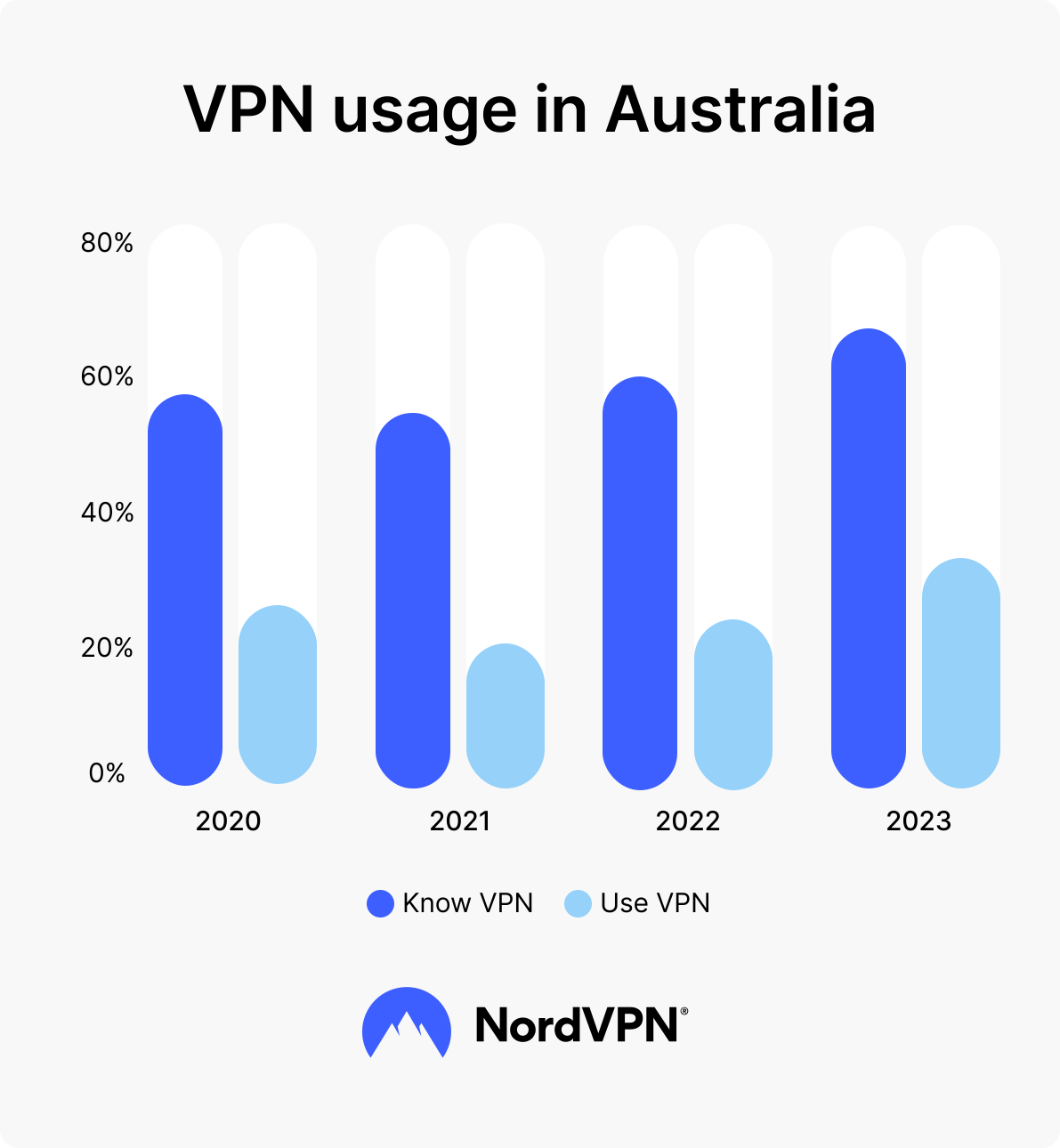
Source: NordVPN So, what propels VPN usage among Aussies? Cyber experts link this growth with the country’s increasing awareness of online privacy, data retention issues, and access to geo-restricted content. Not to mention that one-third of Australians work remotely, per an ABS report in 2023.
Trends in Internet Security Concerns
While free VPN usage has dropped globally, Australia has seen an upward trend. The latest statistics show that a quarter of Aussies (25.7%) who use VPNs opt for free services even though they are less reliable.
Free VPNs are often a privacy illusion. Since running servers requires hefty costs, providers find ways to make their operations profit. These companies track or sell user data to third parties, bombarding users with ads or forcing clients to upgrade to paid versions.
This security compromise is shifting, as 6 in 10 Australian VPN users opting for paid subscriptions. Similar data shows one in five (19.9%) use corporate VPNs to adopt more secure browsing practices (refer to the graph).
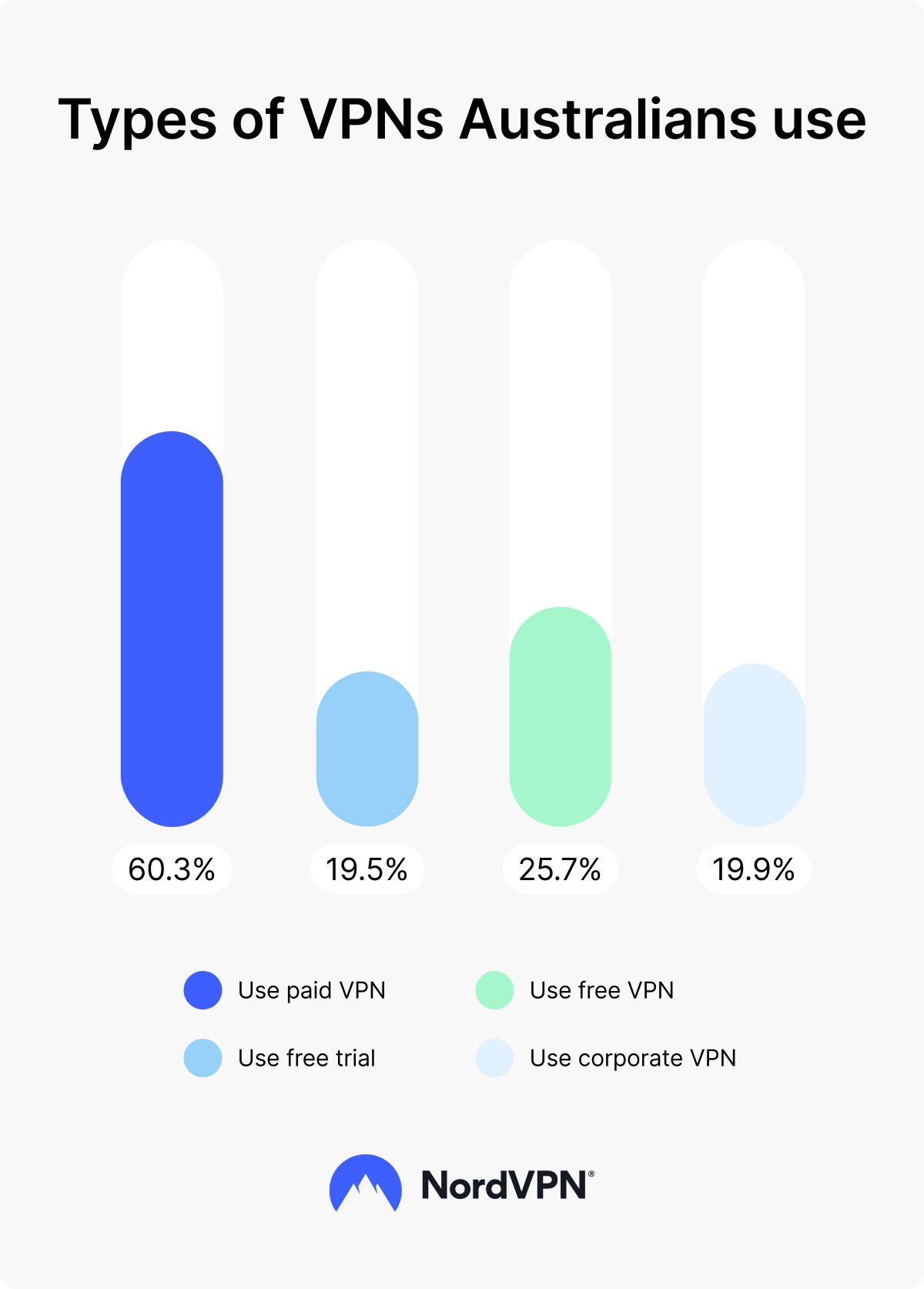
Source: NordVPN Meanwhile, Australia’s strict data retention policies fuel VPN adoption. The government mandates ISPs retain user’s communication metadata for three years. Worse still, private agencies can access your data, which includes email address, IP address, exact location, and all forms of communication (excluding content).
Breakdown of VPN Usage Demographics in Australia
Digital trust has steadily eroded in Australia following cyber security breaches. This explains why 82% of Aussies agree it’s important to stay up-to-date and aware of the latest online security practices. This sentiment is stronger among older users, with 89% of those aged 50 and up firmly agree.
Age and Gender Demographics
In 2024, 9 out of 10 Aussies practice at least one online security measure, one of which includes using a VPN service.
Similar to almost every market, the typical VPN user in Australia is mostly male, aged 25~54.
A NordVPN survey shows that Gen Z are the most frequent users of VPNs. Most of them use free VPN services.
On the other hand, Gen Y (millennials) have the highest concern for online privacy, evidenced by their prudent VPN usage habits. This group mostly uses paid VPNs, from surfing multiple content to accessing overseas streaming services and websites.
VPN Usage: Consumers vs Business
According to auDa 2024 report, 27% of Australian consumers and 36% of small businesses use VPNs. These high adoption rates suggest Aussies trust VPNs as actionable safety blankets from online threats.
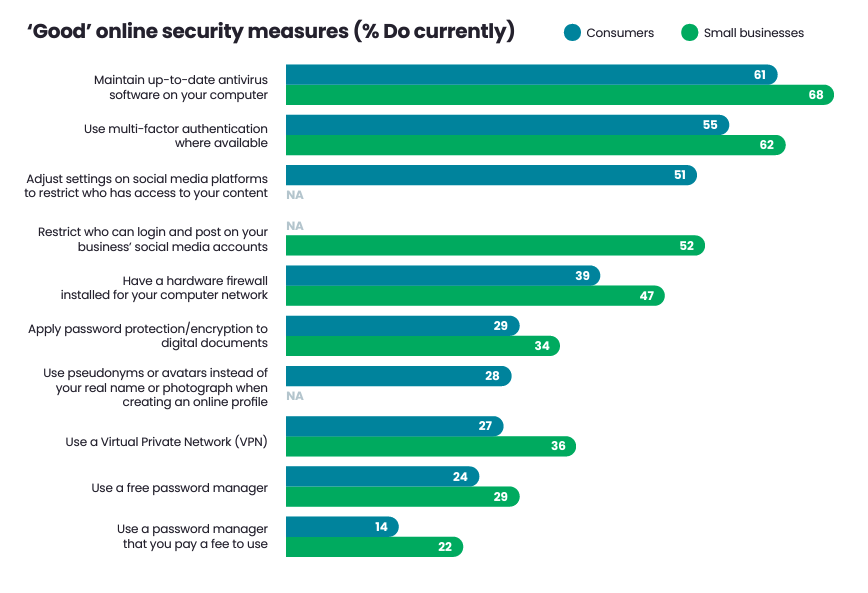

Source: Digital Lives of Australians 2024
Purpose of VPN Usage
Ever tried to watch a show or play a game only hosted on another continent? Geo-restricted content might block you out if you're attempting to access from an Australian IP address.
Roughly 70% of organisations use VPNs to provide improved security and access for employees working remotely.
Following this, 33% use it to connect to sensitive websites. Interestingly, about 20% use VPN for on-campus access to conceal their online footprints in fear of being monitored.
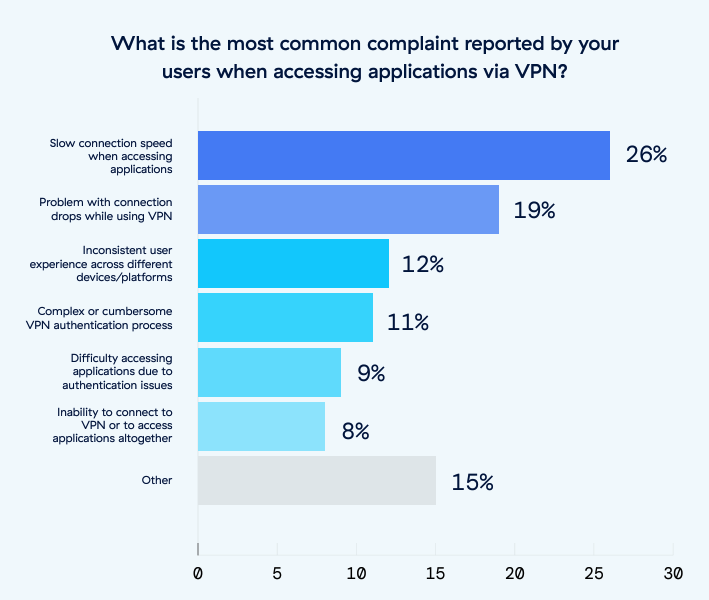
Source: Zscaler ThreatLabz 2024
The Future of VPNs in Australia
Does increasing awareness of online privacy risks catapult VPN usage? Although VPN usage has increased recently, it still faces challenges in creating a secure tunnel for internet activity.
Market Projections
Australia’s VPN market generated US$1.099 billion in 2023. While that only accounts for 1.7% of the global market, research forecasted it to grow 8% (CAGR), reaching 1.981 billion by 2030. This figure suggests that, along with reliance on digital services, more Aussies will use VPNs to protect their privacy.
Technological Advancements
Given that VPN growth shows no signs of slowing down, can technological innovations push or drag this? For instance, the rollout of 5G networks provides high-speed access to ensure seamless VPN usage. This faster speed and lower latency allows you to access geo-blocked content without buffering, making VPN more appealing even for non-technical users.
Meanwhile, advancing smart devices, including Internet-of-things (IoT) devices and wearables, have unique security needs. This further expands adoption, with AI-powered VPN solutions flooding the market. However, this should be taken cautiously, as AI integration can likely amplify security risks.
Regulatory Impact
Australia is one of the strictest nations that enforce data protection, but to what extent? The country’s Telecommunications (Interception and Access) Act retains user data set for about 2 years, including but not limited to phone numbers, email addresses, and IP addresses.
The good news is that retained data excludes the message’s content or web-browsing histories, all while encrypted and protected from unauthorised access. While Australia’s Privacy Act protects user’s personal information, these regulations could tip off potential limitations on VPN usage.
The Impact of VPN Usage on Online Privacy and Security in Australia
As you surf the internet, it’s becoming clearer that you may be under threat from potential hackers, being monitored, having your data leaked or being exposed. Realising this, it's more important than ever that you realise how to safeguard yourself and your data.
Online Privacy Protection
A VPN creates a secret tunnel for your online activities. Once you connect to a VPN, your data gets sent through an encrypted server, making it difficult for third parties to intercept or decipher.
To use a simplistic analogy, it’s similar to sealing a letter in an envelope, so as to prevent anyone snooping around from being able to see what's written within.
VPNs also mask your IP address, ensuring all private online actions are anonymous and untraceable. This enhanced online security attracts roughly 35% of potential Australian users, yet they are unsure what to do.
Similar data reveals that 38% of consumers want to use a VPN but still need some guidance, while only 26% say they could implement it without guidance.
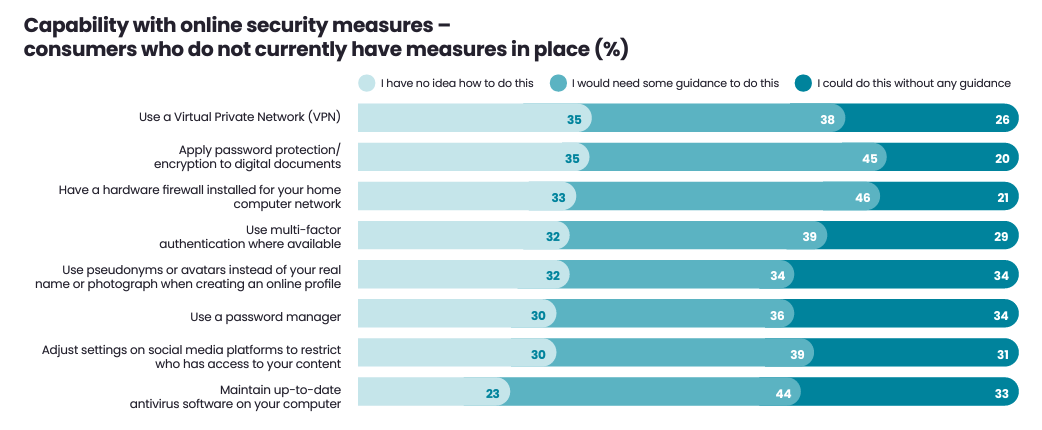
Source: Digital Lives of Australians
Data Privacy Trends
How closely do you pay attention to the terms and conditions of the sites you visit daily? In Australia, most users are unaware of how much personal data these digital services collect. According to a national survey, 62% of Aussies consider protecting their personal information a primary life concern.
An ACCC inquiry reports 82% of Australians are uncomfortable sharing their health information with third parties. Following this are income (78%), phone number (77%), and location (72%). As 47% of Aussies have had a negative privacy experience, this drives the steady adoption of security software and tools, including VPNs.
Data Australians do not share with third parties:
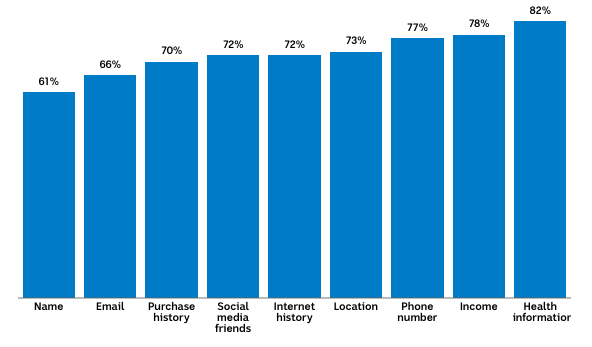
Source: ABC News
Encryption and Protection
While no solution offers absolute anonymity, robust encryption can thwart most, if not all, potential cyber threats.
Here are a few pointers to find a high-quality VPN to secure all your digital footprints:
- Top-Notch Security: Look for virtually unbreakable encryption standards like AES-256 or kill switches to disconnect the internet once the VPN connection drops.
- Fast Speeds: Some VPNs can slow you down, so opt for providers with high-speed servers to ensure a secure, seamless online experience.
- Wide Server Network: More global servers means more options to bypass location-restricted content and services.
- Multi-Device & Platform Compatibility: Besides working on all devices, an ideal VPN specialises in unblocking streaming platforms and websites.
- Responsive Support: If something goes wayward, responsive customer support is essential, particularly in persistent cyberattacks.
Final Thoughts
As digital privacy concerns escalate, VPNs are becoming essential for Aussies to keep their digital life safe and secure. Whether you’re accessing geo-restricted content or fortifying online security, a VPN is a smart investment–acting as a personal online bodyguard and travel agent.
Looking for more statistics? Make sure to check out our other statistic articles below!
- Australian Mobile Phone Statistics
- Australian eCommerce Statistics
- Australian Local SEO Statistics
- Australian Internet Statistics
- Australian Buy Now & Pay Later Statistics
- Youtube Statistics Australian & Global
- Blogging Statistics
Frequently Asked Questions
Daniel Law
Daniel Law is the SEO Director at Red Search, a specialist SEO agency based in Sydney, Australia. With over 15 years of experience in the industry, Daniel has a wealth of knowledge and expertise in search engine optimisation. He is passionate about helping businesses achieve sustainable growth through effective SEO, and stays across every shift in the search landscape.